

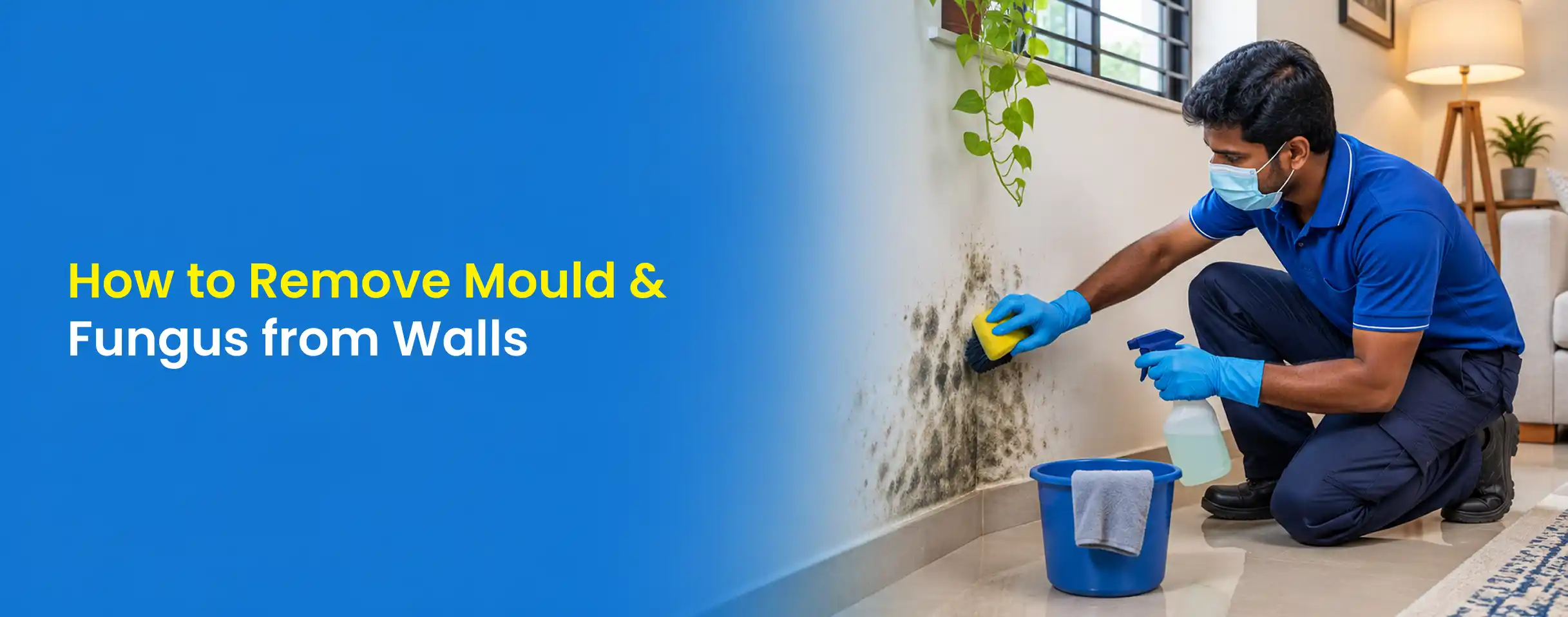
Have you noticed dark patches spreading across your walls or a musty smell that refuses to go away? These are often early signs of mould and fungus growth. What starts as a small stain near a window or bathroom corner can gradually spread, affecting your home’s appearance and indoor environment.
Mould usually develops in areas exposed to moisture, poor ventilation or water leakage. During the monsoon, damp walls become particularly vulnerable, especially in bathrooms, kitchens and rooms with limited airflow.
The good news is that minor surface growth can often be cleaned using the right methods. However, simply wiping away the stains may not prevent them from returning.
In this guide, Homecare Solutions explain how to remove mold from walls, identify the causes of fungal growth and share practical ways to prevent the problem from coming back.
Why Do Mould and Fungus Grow on Walls?
Mould is a type of fungus that grows in damp environments. Its tiny spores are naturally present in the air, but they begin growing when they settle on surfaces with sufficient moisture.
Several household conditions can encourage fungal growth.
- Water leakage: Leaking pipes, damaged roofs and wall cracks allow moisture to enter building materials.
- Poor ventilation: Bathrooms, kitchens and closed rooms retain moisture when fresh air cannot circulate properly.
- High humidity: Humid weather and prolonged monsoon conditions can create damp indoor environments.
- Condensation: Moisture collects on cooler walls, particularly around windows and external-facing surfaces.
- Damp building materials: Walls that remain wet after flooding, seepage or construction work provide favourable conditions for fungal growth.
Understanding the source of moisture is important because cleaning alone cannot permanently solve a recurring problem.
Signs of Mould and Fungus on Walls
Fungal growth is not always immediately noticeable. Sometimes, the first sign is an unusual smell or a change in the wall’s appearance.
Common warning signs include:
- Black, green, grey or white patches appearing on walls.
- A persistent musty smell inside the room.
- Peeling paint, bubbling wallpaper or discoloured plaster.
- Damp spots around windows, ceilings and corners.
- Stains that return shortly after cleaning.
If you notice mold on walls, inspect the surrounding area for leaks or condensation. A patch that keeps spreading may indicate moisture trapped beneath the surface.
How to Remove Mould and Fungus from Walls: Step-by-Step
Cleaning a small affected area requires patience and the right precautions. Before starting, check whether the growth is limited to the surface or whether the wall shows signs of deeper water damage.
Step 1: Identify and Fix the Moisture Source
Begin by examining the affected wall for leaking pipes, roof damage, seepage or condensation. Removing visible fungus without correcting these problems will only provide temporary results.
Repair any identified leakage and allow the surface to dry. If the plaster feels soft, swollen or heavily damaged, professional assessment may be necessary before cleaning.
Step 2: Wear Protective Equipment
Mould cleaning can release spores into the surrounding air. Wear protective gloves, sealed goggles and an N95 respirator to reduce exposure during the process.
Open windows to improve ventilation and keep children and pets away from the affected area. People with asthma, significant allergies or weakened immunity should avoid carrying out mould cleaning themselves.
Step 3: Prepare a Mild Cleaning Solution
For small patches on washable, hard surfaces, mix a little mild detergent with clean water. This can help loosen visible fungal growth without relying on harsh chemicals.
Avoid combining different cleaning products, particularly bleach with ammonia or acidic cleaners. Such combinations can release dangerous fumes and create unnecessary health risks.
Step 4: Gently Clean the Affected Surface
Dip a soft cloth or sponge into the cleaning solution and carefully wipe the affected area. Use gentle movements to lift the visible growth without damaging the wall finish.
Avoid aggressive dry brushing, which can release more spores into the air. For stubborn patches, repeat the cleaning carefully rather than scrubbing excessively. Dispose of heavily contaminated cleaning materials appropriately.
Step 5: Dry the Wall Completely
Once the visible growth has been removed, use a clean cloth to remove excess moisture. Improve ventilation and consider using a dehumidifier to help the wall dry.
Do not repaint or cover the affected area while it remains damp. If fungal growth continues or the wall cannot be cleaned thoroughly, further investigation may be needed.
These steps reflect general guidance from the EPA and CDC for small, manageable mould problems.
How to Remove Fungus from Painted Walls Without Damaging Paint
Many homeowners searching for how to remove mold from painted walls are concerned about removing stains without affecting the existing finish.
Painted surfaces require gentler treatment because strong chemicals, excessive moisture and abrasive scrubbing can cause peeling or discolouration.
Start by testing a mild detergent solution on a small, less visible section. If the paint remains unaffected, gently wipe the stained area using a soft cloth.
Avoid soaking the wall, especially when dealing with older paint or damaged plaster. Remove excess moisture immediately and allow the surface to dry completely.
If paint is already bubbling or flaking, cleaning may not be sufficient. The underlying dampness must be corrected before damaged paint or plaster is repaired.
Can Household Remedies Remove Wall Fungus?
Homeowners often consider vinegar, baking soda or bleach when looking for how to remove fungus from wall surfaces. However, these products are not equally suitable for every material.
White Vinegar
White vinegar is commonly recommended as a household cleaning remedy, but it is not a guaranteed solution for fungal growth. Its acidity may also affect certain painted or decorative finishes.
For routine surface cleaning, mild detergent and water are generally a more straightforward starting point.
Baking Soda
Baking soda can help with some household odours and light surface cleaning. However, it should not be relied upon to eliminate fungal growth inside damp plaster or other porous building materials.
Addressing the underlying moisture remains essential.
Bleach
Bleach is sometimes used on hard, non-porous surfaces, but it is not routinely recommended for household mould removal.
It can damage paint and does not replace physical cleaning. Never mix bleach with other cleaning chemicals, and always follow product safety instructions.
How to Remove Small Black Flies from Your Kitchen
Homeowners researching how to remove small, black flies from kitchen areas should first identify where the insects gather.
If they remain near the sink, inspect the drain for buildup. If they hover around fruits or vegetables, check for spoiled produce. Flies around indoor plants may indicate excessively moist soil.
Use suitable traps to reduce adult flies, but concentrate on removing the breeding source. Otherwise, new insects may continue appearing even after the visible flies have been caught.
Avoid spraying insecticides directly around uncovered food, utensils or cooking surfaces.
How to Prevent Mould and Fungus from Returning
Preventing fungal growth involves keeping indoor moisture under control rather than relying on repeated cleaning.
- Improve ventilation: Open windows when practical and use exhaust fans in bathrooms and kitchens.
- Repair leaks promptly: Check plumbing, roofs and external walls for water entry.
- Control indoor humidity: Use a dehumidifier where necessary and aim to keep humidity below 50%.
- Dry wet areas quickly: Wipe condensation from windows and dry water-affected surfaces promptly.
- Improve furniture placement: Leave some space between large furniture and damp-prone walls to encourage airflow.
Regular inspections are particularly useful during the monsoon, when moisture problems can become more noticeable.
When Should You Consider Professional Help?
Small surface patches can sometimes be managed through careful household cleaning. However, larger infestations require a different approach.
The EPA recommends considering professional assistance when the affected area exceeds approximately 10 square feet, there is extensive water damage or contamination involves difficult-to-clean materials.
Recurring fungal patches, persistent damp smells, damaged plaster and suspected hidden growth are also reasons to seek expert assessment. Professional cleaning may help with affected surfaces, while underlying seepage or structural moisture problems require appropriate repairs.
Conclusion
Removing mould and fungus from walls involves more than clearing visible stains. The most important step is identifying the moisture that allows fungal growth to develop. Gentle cleaning, proper drying, improved ventilation and timely leakage repairs can help manage minor problems and reduce recurrence.
However, widespread growth or repeatedly damp walls should never be ignored. Taking action early helps protect wall finishes, improve indoor conditions and prevent avoidable damage. A consistent maintenance routine can make a meaningful difference in keeping your home cleaner and more comfortable.
Need Professional Home Cleaning Support?
Homecare Solutions offers professional home deep cleaning services to maintain cleaner living spaces. Contact our team to discuss your cleaning requirements and find suitable services for your home.