

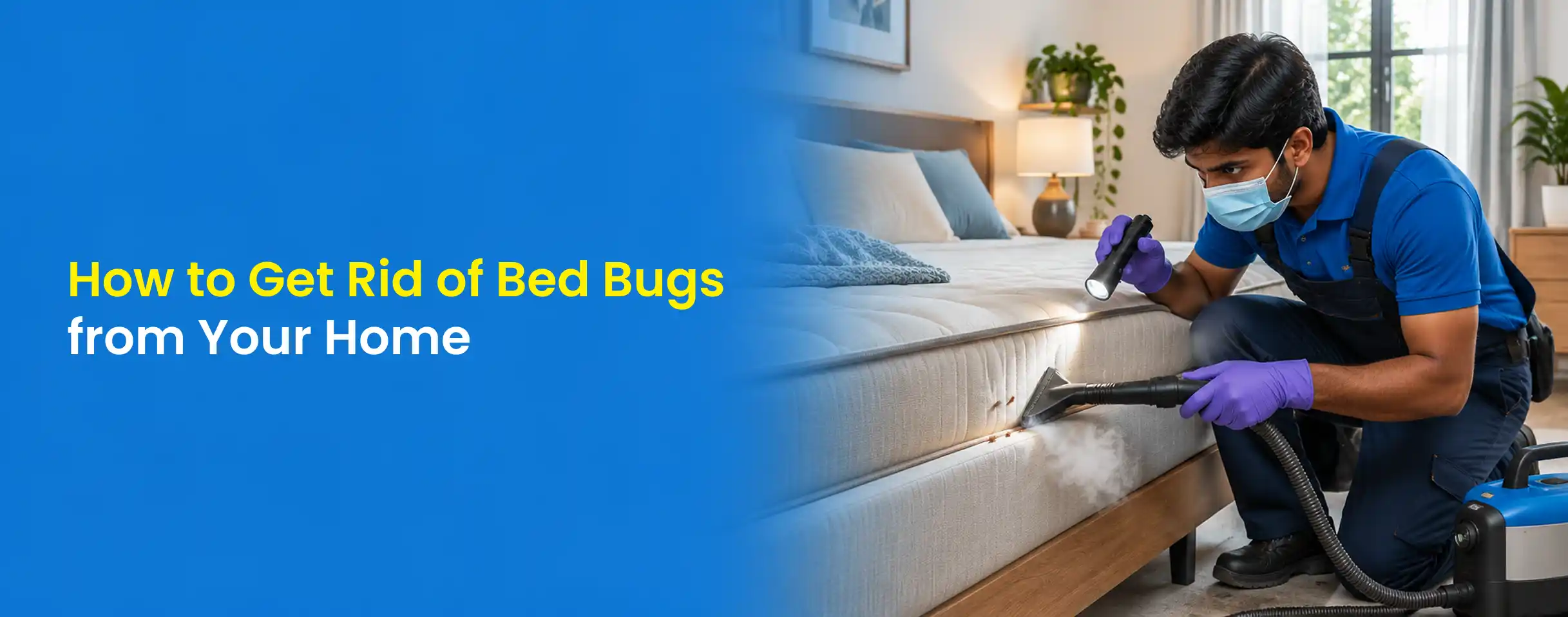
Waking up with itchy bites or noticing tiny insects around your mattress can be frustrating. Bed bugs are small, but once they settle into your home, getting rid of them can become difficult. They hide in mattress seams, furniture joints, cracks and other places that are easy to overlook.
Understanding how to get rid of bed bugs from home can help you identify these hiding spots and choose effective treatment methods. With proper cleaning, heat treatment and regular inspection, you can control the infestation and reduce the chances of bed bugs returning.
In this guide, we’ll explain how to identify bed bugs, remove them using practical methods and prevent them from returning.
How to Identify Bed Bugs in Your Home
Before starting treatment, make sure you’re dealing with bed bugs. These small, reddish-brown insects usually hide during the day and become active at night, feeding on human blood.
Look for these common signs:
- Red, itchy bites: Bites may appear in clusters or lines, although bites alone cannot confirm an infestation.
- Dark spots on mattresses: Small black or brown stains around mattress seams may be bed bug droppings.
- Blood stains on bedsheets: Tiny reddish marks can sometimes appear on bedding.
- Shed skins and eggs: Look for pale, discarded skins and tiny white eggs in hidden corners.
- Live bed bugs: Check mattress edges, bed frames, headboards and nearby upholstered furniture.
Inspect the areas around your bed carefully. Finding these signs early can make treatment easier before the infestation spreads to other rooms.
How to Get Rid of Bed Bugs at Home: Effective Methods
If you’re searching for how to rid house of bed bugs, start by treating the places where these insects hide. Combining several methods is usually more effective than relying on a single treatment.
1. Wash Bedding and Clothes Using Heat
Remove bedsheets, pillow covers, blankets and affected clothing carefully. Place them in sealed bags before carrying them to the laundry area to avoid spreading insects.
Wash suitable fabrics in hot water according to their care instructions. More importantly, use a clothes dryer on high heat for at least 30 minutes when the material allows it.
High dryer temperatures can kill bed bugs and their eggs. Store cleaned items in sealed bags until the affected areas have been treated.
2. Vacuum Mattresses and Furniture Thoroughly
Vacuuming helps remove visible bed bugs, eggs and debris from accessible surfaces.
Pay particular attention to mattress seams, bed frames, sofa cushions, carpet edges and furniture joints. Move the vacuum attachment slowly across these areas to collect insects hiding in small spaces.
After vacuuming, immediately seal the collected contents in a plastic bag and dispose of them outside your home. Remember that vacuuming alone may not eliminate every hidden insect.
3. Use Steam Treatment on Affected Areas
Bed bugs are sensitive to sufficiently high temperatures, making steam treatment useful for certain surfaces.
A suitable steam cleaner can treat mattress seams, upholstered furniture, bed frames and cracks where insects hide. Move the equipment slowly so the heat reaches the affected areas.
Avoid excessive moisture, particularly on mattresses and wooden furniture. Steam only kills insects and eggs reached by adequate heat, so untreated hiding spots may still contain bed bugs.
4. Protect Your Mattress with a Bed Bug Cover
Mattresses provide several hiding places for bed bugs, especially around stitched edges and folds.
Use a specially designed, bed bug-proof mattress encasement that completely seals the mattress. This traps insects already inside and makes future inspections easier.
Keep the cover properly fitted and follow the manufacturer’s instructions regarding how long it should remain in place.
5. Remove Clutter and Seal Hiding Places
Bed bugs don’t live only in beds. They can hide behind picture frames, inside furniture joints, beneath loose wallpaper and around wall cracks.
Remove unnecessary clutter carefully, keeping potentially infested belongings contained until they can be inspected or treated.
Seal suitable cracks around skirting boards and walls after checking for insect activity. Reducing hiding places makes further treatment and monitoring easier.
6. Consider Professional Bed Bug Treatment
Many homeowners ask, how can I get rid of bed bugs fast, especially when bites continue despite cleaning.
Professional pest control is worth considering when bed bugs appear in multiple rooms, continue returning or remain hidden in difficult-to-reach spaces.
Trained technicians can inspect affected areas and recommend appropriate chemical, steam or heat-based treatments. Depending on the infestation, more than one treatment visit may be necessary.
Common Bed Bug Removal Mistakes to Avoid
Trying different household remedies without understanding their limitations can allow an infestation to continue.
Avoid these common mistakes:
- Relying on perfumes or essential oils: Strong smells may temporarily affect insect behaviour but cannot reliably eliminate an infestation.
- Using Dettol as a bed bug treatment: Household disinfectants are not proven substitutes for dedicated bed bug control.
- Spraying chemicals indiscriminately: Incorrect insecticide application may create health risks without reaching hidden insects.
- Throwing away mattresses immediately: Disposal is not always necessary, and moving untreated furniture can spread bed bugs.
- Stopping treatment too early: Eggs or surviving insects may remain even when visible activity decreases.
Never use petrol, kerosene or rubbing alcohol to treat bed bugs because of serious fire and safety risks.
How to Prevent Bed Bugs from Coming Back
Successful permanent bed bug removal requires treating the existing infestation and taking precautions against reintroduction.
Inspect mattress seams and furniture regularly, especially after treatment. Check second-hand furniture before bringing it indoors, and examine luggage after travelling.
Keep sleeping areas organised and use bed bug interceptor traps beneath bed legs to monitor activity. Avoid placing bedding directly on the floor.
If you live in an apartment, inform building management when necessary, as neighbouring units may also require inspection.
These habits help you detect new activity early, although no preventive measure can guarantee that bed bugs will never return.
When Should You Call Professional Pest Control?
Home treatments may reduce a small infestation, but established bed bug populations are harder to eliminate completely.
Consider professional assistance if you continue finding insects after repeated cleaning, notice bed bugs across several rooms or cannot identify their hiding places.
In Hyderabad, Homecare Solutions provides bed bug treatment for residential properties, including targeted chemical and heat-based approaches.
An inspection can help determine the extent of the infestation and whether additional treatment or follow-up monitoring is required.
Conclusion
Getting rid of bed bugs takes more than regular cleaning, especially when they have spread to different areas of your home. Washing bedding, vacuuming mattresses, using heat treatments and checking hidden spaces can help control the infestation.
However, bed bugs can survive in small cracks and furniture joints, making complete removal difficult without proper treatment. If you continue noticing bites or signs of bed bugs, professional pest control can help address the infestation and reduce the chances of it returning.
Need Bed Bug Treatment in Hyderabad?
Homecare Solutions offers professional pest control services in Hyderabad to tackle bed bug infestations. Contact our team today to discuss suitable treatment options and make your home comfortable again.
Frequently Asked Questions
1. How do you get rid of bed bugs fast at home?
Start by isolating affected bedding, using a hot dryer, vacuuming hiding places and applying suitable steam treatment. Professional assistance may be needed for larger infestations because household cleaning rarely reaches every insect and egg.
2. What permanently kills bed bugs?
Adequately applied heat can kill bed bugs and eggs. However, lasting control usually requires comprehensive treatment, inspection and monitoring to address surviving insects and prevent reintroduction.
3. What smell will keep bedbugs away?
Scents such as peppermint, lavender and tea tree oil are often suggested as repellents, but there is insufficient reliable evidence that they prevent or eliminate bed bug infestations.
4. Can Dettol kill bed bugs?
Dettol is primarily a disinfectant, not a recommended bed bug treatment. It cannot reliably eliminate hidden insects and eggs. Use proven control methods instead.
5. How do I permanently get rid of bed bugs in my house?
Combine heat treatment, careful vacuuming, mattress encasements and professional pest control when necessary. Continue monitoring treated areas and inspect belongings that could introduce new insects.
6. What kills 100% of bed bugs?
Professionally controlled heat treatment can kill all life stages when lethal temperatures reach every affected area. However, no single household method guarantees complete eradication throughout an infested home.
7. Which smell do bed bugs hate?
Some strong fragrances may discourage bed bugs temporarily, but they are not dependable repellents. Cleaning, targeted treatment and regular monitoring are more effective approaches.